
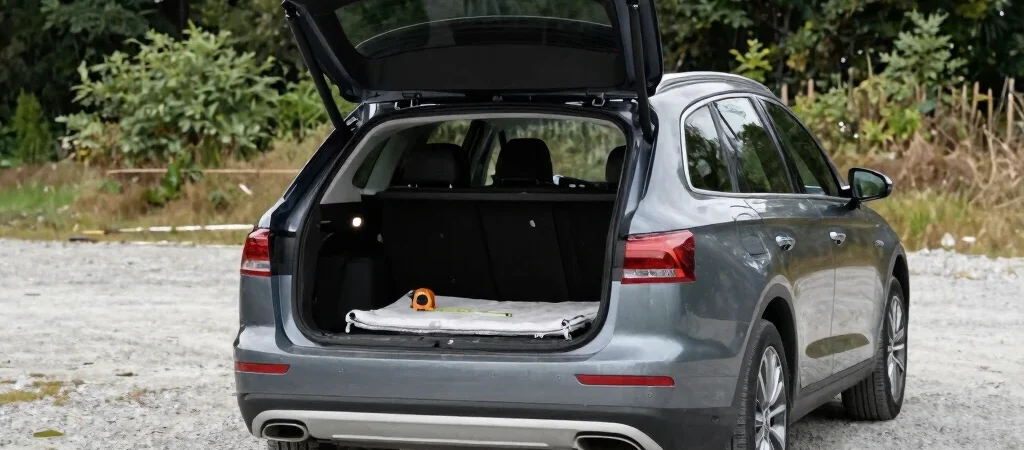
Two cars can look nearly alike from the road and feel completely different once the rear seats fold down. A sleeping plan depends on the shape of the cargo area, the height of the roof, and how you get in and out. That is why vehicle-specific considerations belong at the start of any modular setup.
Hatchbacks reward careful packing
In a compact hatchback, the available length and width can change sharply around the seatbacks and wheel arches. A narrow storage arrangement may preserve room for a sleeping space, while bulky containers can quickly block access to smaller essentials. Measure with the seats folded and upright; your travel plan may need both configurations.
Wagons balance access and length
A wagon often offers a longer cargo floor and a wide tailgate, which can make loading and reaching storage easier. But floor length alone does not guarantee a comfortable sleeping arrangement: sloping seats, interior trim, and the height of the folded seatbacks all matter. Test the surface with the bedding you plan to bring, rather than relying on the vehicle’s exterior proportions.
Vans change the interior equation
A van may provide more vertical room, but that extra volume can invite more gear than a light trip needs. Consider whether you can reach the items stored furthest inside and whether the layout leaves a clear path from the door to the sleeping space. A spacious cabin is useful only when its storage plan remains easy to live with.
Before settling on a layout, sketch the vehicle from above and mark doors, wheel arches, seat positions, and the items that must stay accessible. The best plan is not the one that fits a different person’s car; it is the one that fits yours without making travel feel like constant rearranging.