
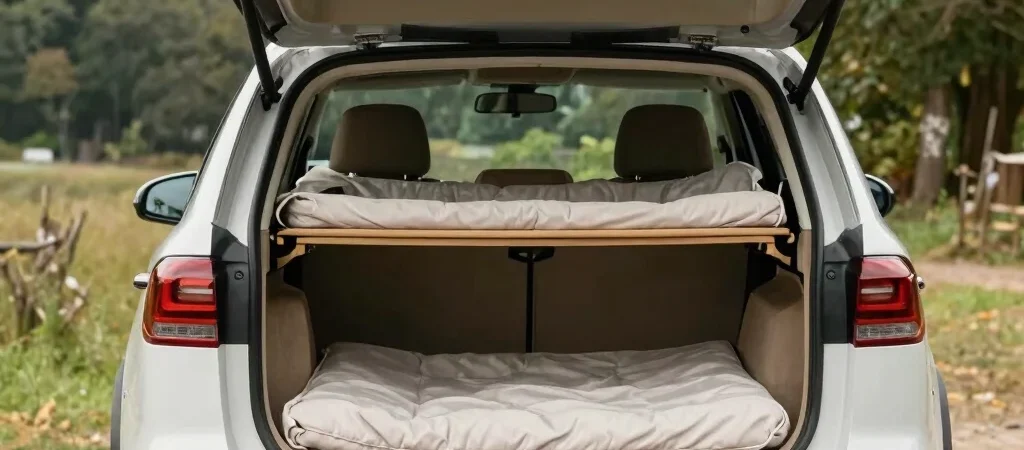
The tempting first question is where the bed goes. A better one is what still needs to fit beside it: a day bag, muddy shoes, water, and the things you want within reach when you stop. A removable layout works best when it starts with those ordinary constraints, not a perfect-looking diagram.
Map the car before the setup
Park on level ground and measure the usable space with the rear seats in the positions you actually expect to use. Check the narrow points between wheel arches, the height below the roof, and how the tailgate opens. Those measurements show where storage can go and whether a sleeping space can take shape without turning the cabin into a puzzle.
Give each item a place
A modular vehicle setup is more than a platform: it is a plan for what travels where. Keep frequent-use items accessible from the open tailgate, and separate cooking or wet-weather gear from bedding. When every object has to be moved twice to reach the sleeping space, the layout may be asking you to carry too much or arrange it differently.
Keep the changeover simple
The value of a removable arrangement is that the car can return to everyday use. Think through the actual changeover: where the modules rest when removed, which parts need to come out first, and whether one person can manage the sequence. A setup that is straightforward to reverse is more likely to fit real travel than one that only works once everything is perfectly packed.
Start with a tape measure, a list of what you carry, and a trial arrangement using boxes or folded bedding. The point is not to fill the car; it is to make the sleeping space, storage, and daily driving work together.